Ultra-Pure Water Treatment Problems That Quietly Undermine Yield
Ultra-Pure Water Treatment failures rarely announce themselves with a dramatic alarm. More often, they appear as a gradual rise in defect rates, unexplained variability in cleaning performance, recurring microbial findings, or a stubborn gap between designed purity and real process consistency. For quality control and safety managers, the practical question is not whether Ultra-Pure Water Treatment matters, but how small control failures in the water system quietly translate into lower yield, compliance exposure, and operational instability.
In high-spec production environments, water is not just a utility. It is a process-critical input that directly affects surface chemistry, residue removal, equipment cleanliness, and contamination risk. When the system drifts outside control, the impact can remain hidden for weeks before it shows up in product quality metrics, deviation reports, or customer complaints. That delay is exactly what makes the problem dangerous.
This article focuses on the search intent behind Ultra-Pure Water Treatment problems: how to identify the hidden failure modes, what quality and safety teams should monitor first, and how to judge whether a UPW system is truly protecting yield rather than only meeting design assumptions on paper. The goal is to provide a practical framework for detecting the issues that erode performance quietly but persistently.
Why Ultra-Pure Water Treatment Problems Are Often Missed Until Yield Drops
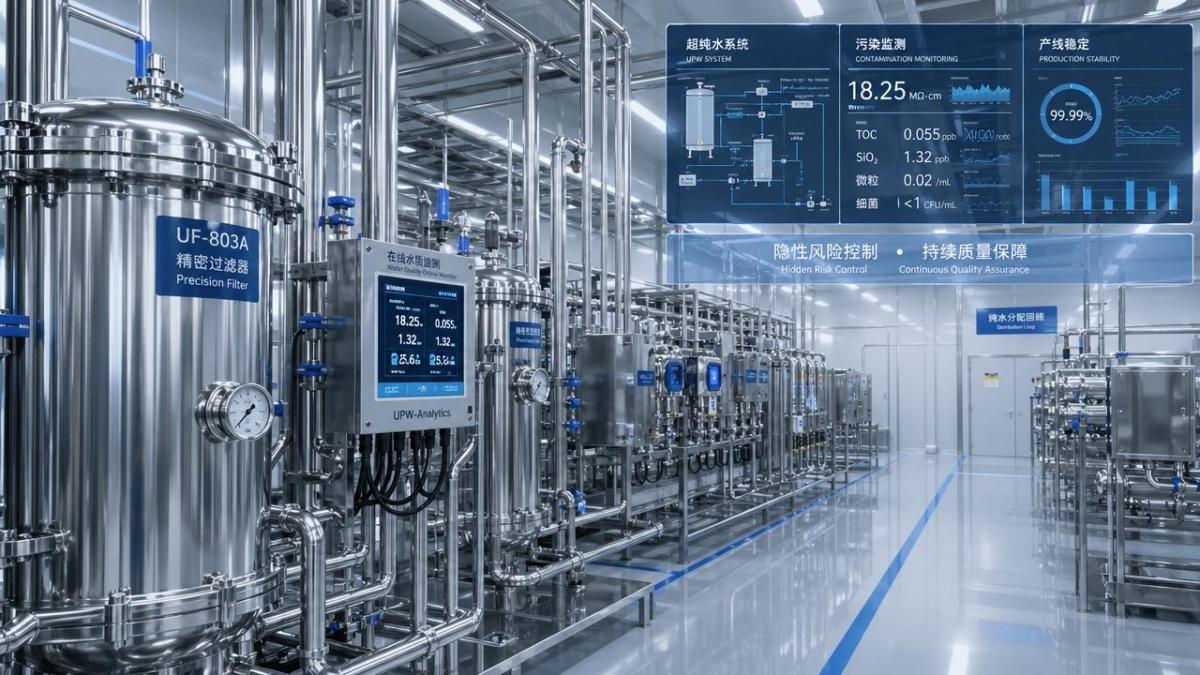
Most production teams expect major utility failures to be obvious. A pump trips, pressure collapses, or a critical alarm forces immediate action. Ultra-pure water systems rarely fail that way. Instead, they drift. Resistivity may remain near target while TOC slowly rises. Particle levels may appear acceptable at one sample point while the distribution loop sheds contamination elsewhere. Microbial control may look stable in routine testing even as biofilm begins to establish in low-flow sections.
For quality control personnel, this means conventional pass-fail thinking is not enough. A system can remain technically operational while becoming process-risky. For safety managers, the same issue creates a second concern: when hidden process instability accumulates, emergency maintenance, chemical intervention, and unplanned shutdowns become more likely. In regulated or high-value environments, that can quickly become a compliance and business continuity problem.
The core reason these failures are missed is that product yield and UPW quality are separated by time, distance, and multiple process steps. The water leaves the polishing skid in-spec, travels through a loop, enters tools, contacts surfaces, and only later affects defects, residues, corrosion behavior, or analytical anomalies. Unless teams monitor the full chain, they tend to see only isolated symptoms rather than the underlying water system cause.
Which Hidden UPW Failure Modes Matter Most to Quality and Safety Teams
When readers search for Ultra-Pure Water Treatment problems, they usually do not want a generic overview of membranes, ion exchange, or filtration theory. They want to know which failure modes create real production risk. In practice, the most important categories are ionic contamination, organic contamination, particles, microbial growth, dissolved gases, material incompatibility, and hydraulic instability within the distribution loop.
Ionic contamination is one of the most underestimated yield threats because even very small excursions can affect precision cleaning, etching, rinsing, and analytical reproducibility. A minor increase in sodium, silica, boron, or other ionic species may not trigger immediate operational alarms, yet can change surface condition and leave residues that impact downstream process performance. For quality teams, the key lesson is that “still very clean” is not the same as “clean enough for the process window.”
Organic contamination, often tracked through total organic carbon, creates another quiet failure path. Elevated organics may come from resin degradation, membrane issues, chemical ingress, storage conditions, or distribution system materials. Even low-level organic contamination can interfere with sensitive manufacturing steps and complicate root-cause analysis because the resulting defects are rarely labeled as water-related at first.
Particles are easier to understand conceptually but harder to control consistently. A system may produce acceptable particle counts at the plant level while local turbulence, dead legs, valve wear, maintenance work, or poor loop design introduce intermittent spikes. Those spikes are especially damaging because they create episodic defects that seem random. Random defects are often the most expensive to investigate because they do not align neatly with batch boundaries or obvious equipment events.
Microbial control is a dual concern for both quality and safety. In pharmaceutical, biotech, and advanced industrial settings, microbial growth can compromise product integrity, produce endotoxin-related problems, and trigger sanitation or investigation burdens that ripple through operations. Once biofilm forms, correction is rarely quick or inexpensive. The hidden cost is not only remediation but also the credibility loss in monitoring data when counts become inconsistent or location-dependent.
Dissolved gases such as oxygen and carbon dioxide can also undermine performance, particularly where corrosion sensitivity, oxidation effects, or resistivity stability matter. Carbon dioxide ingress is especially relevant because it can depress resistivity and create misleading interpretations if teams focus on one parameter in isolation. A resistivity shift may be blamed on resin exhaustion when the deeper issue is gas control or loop integrity.
Material compatibility is another overlooked problem. In an Ultra-Pure Water Treatment system, the wrong gasket, valve seat, tubing material, lubricant, or weld finish can become a contamination source. These are not always design-stage mistakes. They often emerge during maintenance, retrofit work, or supplier substitutions. For quality and safety managers, that means change control over water-contact components deserves the same seriousness as change control over process-critical production equipment.
How Distribution Loops Quietly Undermine a Well-Designed Water Plant
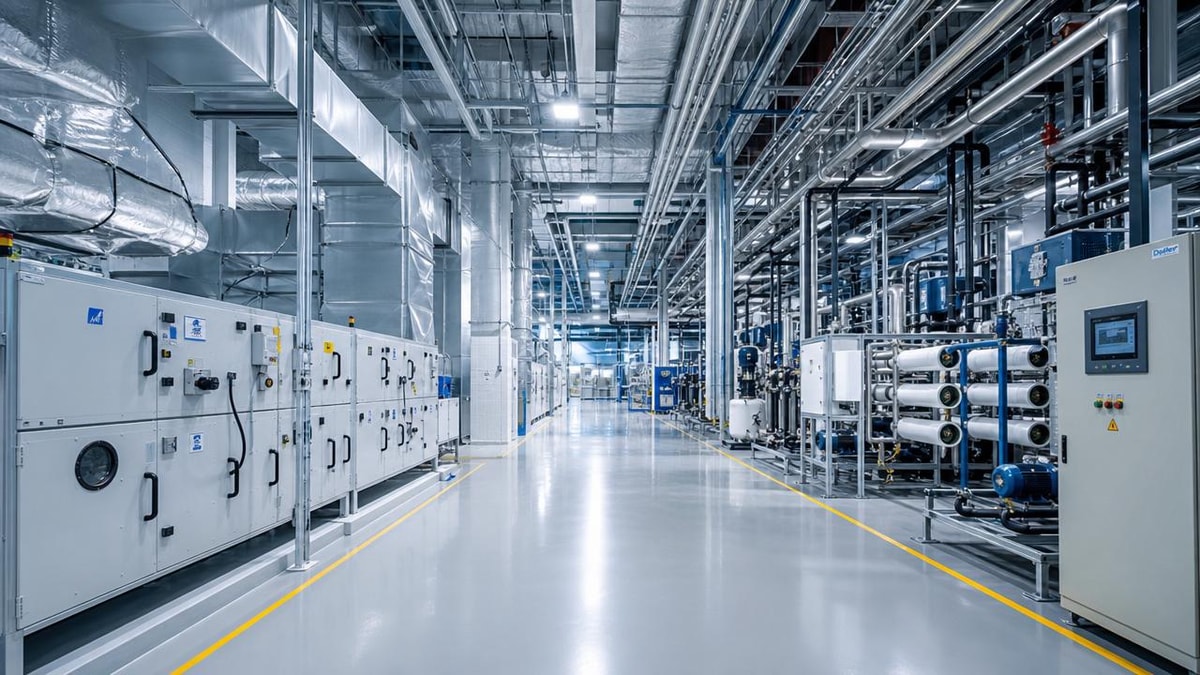
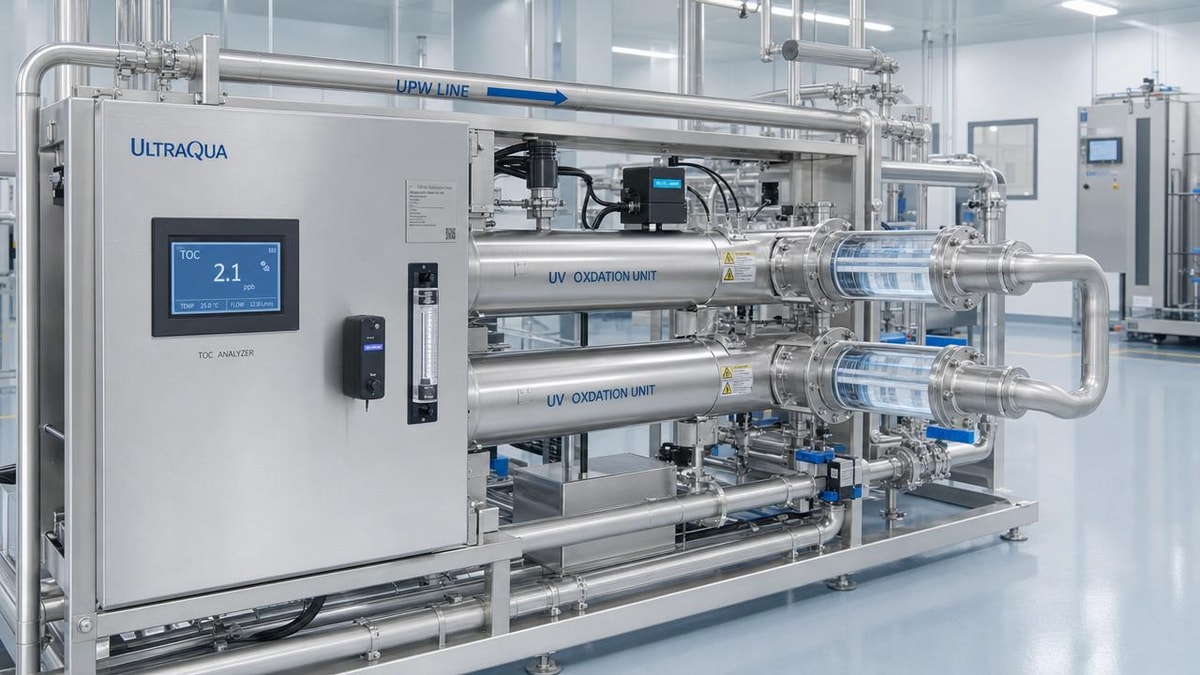
One of the most important practical insights for non-specialist stakeholders is that many UPW problems do not originate in the main treatment train. They emerge in the distribution loop. A facility may invest heavily in reverse osmosis, deionization, UV oxidation, degasification, and final filtration, yet still struggle with water quality at the point of use because the loop itself is poorly controlled.
Common loop-related problems include dead legs, low-velocity sections, insufficient recirculation, poor slope, unsuitable branch design, stagnant takeoffs, and inadequate temperature management. Each of these conditions increases the chance of particle release, microbial growth, or inconsistent chemistry at the tool interface. The bigger the facility and the more modifications it has experienced over time, the greater the likelihood that the as-operated loop differs meaningfully from the as-designed loop.
For quality managers, the key implication is sampling strategy. Sampling only at the generation skid or one return point creates false confidence. Critical monitoring points should reflect actual risk: after storage, at loop return, near high-sensitivity tools, after maintenance zones, and at historically unstable branches. If sampling design does not reflect process criticality, even accurate data can be operationally misleading.
For safety managers, loop design also affects sanitation and intervention risk. Systems with poor accessibility, unclear isolation logic, or repeated stagnant zones often require more aggressive corrective actions. That raises exposure to chemicals, downtime, procedural complexity, and the possibility of incomplete recovery after disinfection or repair. Good loop control is not only a quality issue; it is a risk reduction strategy for maintenance and recovery operations.
What Early Warning Signs Should Trigger Investigation Before Yield Is Affected
The most useful Ultra-Pure Water Treatment programs do not wait for a specification breach. They track weak signals that suggest the system is losing control. These signals often appear in combination rather than isolation, which is why trend review matters more than one-time readings.
Quality teams should pay close attention to drifting but still “acceptable” resistivity, recurring low-level TOC increases, unstable particle counts, unexplained tool-to-tool variability, repeat cleaning failures, residue findings, corrosion anomalies, and sudden increases in filter replacement frequency. None of these signs alone proves a UPW issue, but together they often point toward a water-related degradation pathway.
Another important warning sign is increased deviation complexity. If investigations repeatedly conclude with ambiguous root causes such as operator variation, environmental fluctuation, or intermittent equipment behavior, water should be reconsidered as a cross-system contributor. UPW problems often hide behind multi-factor symptoms because they influence many process steps at once without dominating any single one.
Maintenance history also provides clues. Frequent valve issues, repeated sanitization, sensor recalibration, UV unit performance loss, resin changes that do not restore expected stability, or persistent differential pressure irregularities may indicate that the system is compensating for a deeper control problem. Quality and safety leaders should not review utility maintenance separately from product-impact data; the real insight comes from connecting both.
How to Assess Whether Your Monitoring Program Is Good Enough
Many facilities have monitoring programs that generate substantial data but still miss the conditions that matter most. The real test of a monitoring strategy is not volume. It is whether the program can detect slow degradation early enough to prevent product impact. That requires alignment among parameters, locations, frequency, alert logic, and response procedures.
A strong program usually includes continuous monitoring for core parameters such as resistivity, TOC, flow, pressure, and temperature where appropriate, supported by risk-based routine checks for particles, microbes, and specific ionic contaminants. Just as important, alarms should not be set only at formal specification limits. Internal action levels and trend-based alerts are often more valuable because they create time to investigate before quality is compromised.
Sampling frequency should also reflect process sensitivity. In high-risk environments, monthly or weekly data may be insufficient to capture intermittent excursions. If a branch line only becomes unstable during certain production schedules, CIP events, or maintenance windows, infrequent sampling may completely miss the event. A useful question for QC managers is simple: if a contamination spike lasts two hours, would the current program ever see it?
Data integration is equally critical. UPW monitoring should not sit in a silo separate from MES, SCADA, deviation management, environmental monitoring, and tool performance records. Hidden yield loss is often revealed only when water quality trends are overlaid with scrap patterns, cleaning results, alarm logs, or maintenance actions. Without integration, teams end up with isolated “normal” datasets that never explain abnormal production behavior.
Practical Risk Controls That Deliver the Most Value
For organizations trying to improve Ultra-Pure Water Treatment performance without overcomplicating operations, a few controls usually deliver the highest value. First, validate actual point-of-use performance rather than assuming plant-level purity guarantees tool-level purity. Second, review distribution loop hydraulics and eliminate dead legs, underused branches, and stagnant zones wherever possible.
Third, tighten change control for all water-contact materials and maintenance activities. A well-designed system can be undermined by one unsuitable replacement part or one poorly managed intervention. Fourth, establish trend-based quality reviews that combine utility data, process defects, and maintenance events. This is often the fastest route to identifying hidden causal relationships.
Fifth, define clear investigation triggers before product quality visibly declines. If particle variability, TOC drift, or microbial inconsistency reaches a pre-set threshold, teams should know exactly who owns the response, what checks are required, and when production risk assessment must begin. Predefined escalation reduces the lag between signal detection and effective action.
Finally, treat UPW as a strategic contamination-control system, not a background utility. In sectors where process windows are narrow and compliance expectations are high, that mindset shift is often the difference between reactive troubleshooting and sustained process control.
Why This Matters for Compliance, Product Integrity, and Operational Resilience
For quality control and safety professionals, the value of strong Ultra-Pure Water Treatment extends beyond cleaner water. It supports investigation quality, audit readiness, process consistency, and resilience under operational stress. When utility systems are well characterized and tightly controlled, teams can rule risks in or out faster, contain deviations more effectively, and avoid the cascading uncertainty that follows unexplained quality events.
In regulated industries, weak control over UPW can expose gaps in documentation, trend review, preventive maintenance, and risk management. In advanced manufacturing, it can silently erode yield and inflate cost of poor quality. In both cases, the business impact is larger than the water system alone. It affects throughput, customer confidence, and leadership’s ability to trust process stability.
The most dangerous UPW issues are not the ones that fail spectacularly. They are the ones that remain just stable enough to avoid immediate alarms while steadily reducing process margin. That is why quality and safety teams should judge water systems not only by whether they meet specifications today, but by whether they can reliably protect production integrity over time.
Ultra-Pure Water Treatment problems rarely look urgent at first, but they can quietly undermine yield, increase compliance exposure, and complicate root-cause analysis across the plant. For quality control and safety managers, the practical priority is to focus on hidden failure modes, point-of-use reality, trend-based monitoring, and disciplined change control. When those elements are in place, UPW becomes what it should be: a stable foundation for product quality rather than a silent source of variability.
Get weekly intelligence in your inbox.
No noise. No sponsored content. Pure intelligence.
 May 02, 2026How to Evaluate a Fan Filter Units Manufacturer Beyond Unit PriceFan Filter Units manufacturer selection goes beyond unit price. Learn how to compare compliance, performance, lifecycle cost, and support to protect margins and win long-term channel growth.
 May 02, 2026When Magnetic-Levitation Centrifugal Chillers Pay Off in Real FacilitiesMagnetic-Levitation Centrifugal Chillers pay off when facilities need uptime, part-load efficiency, and low-risk cooling. See where they deliver real ROI in cleanrooms, biopharma, hospitals, and advanced manufacturing.
 May 02, 2026Industrial Climate Control Upgrades That Cut Drift and Energy WasteIndustrial Climate Control upgrades that reduce drift, improve compliance, and cut energy waste. Explore practical checklists and high-impact retrofit strategies.
 May 02, 2026ASHRAE Standards Certification: What to Verify Before Final ApprovalASHRAE Standards certification: learn what to verify before final approval, from scope and commissioning proof to lifecycle cost and hidden risk, so you can approve with confidence.
 May 02, 2026Designing a High-Tech Industrial Complex for Stable Air and Utility PerformanceHigh-Tech Industrial Complex design starts with stable air, precise thermal control, and resilient utilities—discover how to protect uptime, compliance, and long-term efficiency.
 May 02, 2026Regulatory Frameworks for Cleanrooms: Common Mistakes to Avoid EarlyRegulatory Frameworks for cleanrooms: avoid early compliance mistakes in ISO, documentation, airflow, and biosafety to reduce audit risk and costly redesigns.
 May 02, 2026SEMI Standards Compliance Gaps That Delay Cleanroom ProjectsSEMI Standards compliance gaps can derail cleanroom projects with rework, delays, and cost overruns. Learn where risks arise early and how to keep delivery on track.
 May 02, 2026Contamination Control Equipment: What Matters Before You Compare QuotesContamination Control equipment: learn what to check before comparing quotes, from ISO compliance and airflow performance to lifecycle cost and cleanroom integration.
 May 02, 2026ESG Compliance Supplier Checklist for Lower Vendor RiskESG Compliance supplier checklist for lower vendor risk: learn how to verify governance, safety, sustainability, and technical reliability before contract award.
 May 02, 2026How to Reduce Sub-Micron Contamination Without Slowing ThroughputSub-Micron Contamination control without slowing output: discover practical cleanroom strategies to cut particle risk, protect yield, and keep high-throughput operations stable.
 May 02, 2026electronica China 2026 Expands Cleanroom Tech Zone by 50%electronica China 2026 expands Cleanroom Tech Zone by 50% — spotlight on Precision Temperature Control & Smart Sensor Integration for semiconductor, quantum, and mRNA applications.
 May 02, 2026EU CBAM Extends to ESD Control Manufacturing from 2027EU CBAM extends to ESD control manufacturing in 2027—anti-static flooring, wrist straps & more now require verified production-line carbon footprints. Act now to avoid border taxes.
 May 02, 2026MFDS Expands Digital Twin Lab Certification to Semiconductors & Battery TestingMFDS Digital Twin Lab certification now covers semiconductors & battery testing — unlock Korean cleanroom tenders, boost interoperability, and future-proof your lab automation.
 May 02, 2026UL 867E:2026 Update Requires EMC + Cybersecurity Certification for IIoT Air MonitorsUL 867E:2026 now mandates EMC + cybersecurity certification for IIoT air monitors — critical for cleanroom & lab deployments. Act before Oct 1, 2026!
 May 02, 2026First ZLD-Compatible 18.2 MΩ·cm UPW System Operational at CATL IndonesiaFirst ZLD-compatible 18.2 MΩ·cm UPW system now live at CATL Indonesia — setting a new global benchmark for battery materials, semiconductor, and nuclear-grade industrial water systems.
 May 02, 2026JIS T 0101:2026 Enforced: UPW TOC ≤0.15 ppb for Semiconductor Equipment in JapanJIS T 0101:2026 enforced: UPW TOC ≤0.15 ppb now mandatory for semiconductor equipment in Japan — critical for exporters, integrators & component suppliers.
 May 02, 2026SABIC BSL-3 Vaccine Plant Launches with Chinese Decon SystemsSABIC BSL-3 Vaccine Plant launches with Chinese decon systems — a milestone for GMP-compliant, WHO PQ-aligned biomanufacturing infrastructure in the Middle East.
 May 02, 2026Germany’s New Green Tariff List: Maglev Chillers at 0%, Oil-Cooled Units +12.5%Germany’s new green tariff list: Maglev chillers at 0%, oil-cooled units +12.5% — key implications for HVAC exporters, OEMs & integrators in the EU market.
 May 02, 2026Southeast Asia EMA Expansion Drives ISO Class 1–3 Cleanroom DemandISO Class 1–3 cleanroom demand surges in Southeast Asia amid EMA expansion—FFUs, filtration components & air shower systems in high demand with lead times now extending to Q1 2027.
 May 02, 2026US/EU Tighten AMC Controls for Cleanrooms, UPW Filter Export Path NarrowsUS/EU tighten AMC controls for cleanrooms—UPW filter exporters face stricter SEMI F57/IEC 63209-2 mandates. Act now to secure market access.
 May 01, 2026HVAC Maintenance AI Reports: How to Spot Useful Insights Instead of NoiseHVAC maintenance AI reports help teams spot real faults, energy waste, and early warnings. Learn how to filter noise, protect uptime, and act faster with confidence.
 May 01, 2026ISO Class 1 Cleanroom: When the Extra Precision Is Worth the InvestmentISO Class 1 Cleanroom: discover when ultra-precision truly pays off. Learn the key business, compliance, and ROI signals before investing in the highest cleanroom standard.
 May 01, 2026What Makes a Quantum Computing Cleanroom Different From a Standard Fab SpaceQuantum Computing Cleanroom requirements go far beyond standard fab space design. Discover how vibration, thermal stability, EMI control, and smart monitoring shape quantum-ready infrastructure.
 May 01, 2026Pharmaceutical Cleanroom Upgrades That Improve Compliance Without RebuildingPharmaceutical Cleanroom upgrades can improve GMP compliance without a full rebuild. Discover retrofit strategies that reduce downtime, control contamination, and protect production.
 May 01, 2026High-Risk Lab Engineering: Design Choices That Reduce Containment RiskHigh-Risk Lab Engineering design choices can reduce containment risk, improve biosafety, and strengthen compliance readiness. Discover practical strategies for safer, more resilient labs.
 May 01, 2026ISO 14644 Compliance Mistakes That Delay Cleanroom ApprovalISO 14644 Compliance mistakes can derail cleanroom approval with costly rework, failed testing, and missing documentation. Learn the most common risks and how to prevent delays.
 May 01, 2026High-Performance Thermodynamic Hardware: How to Compare Real EfficiencyHigh-Performance Thermodynamic Hardware comparison starts with real efficiency, not just ratings. Discover how to evaluate lifecycle energy use, control stability, compliance fit, and long-term risk.