PSA Adds Second UPW Inspection Lane, Cuts Clearance to 48 Hours
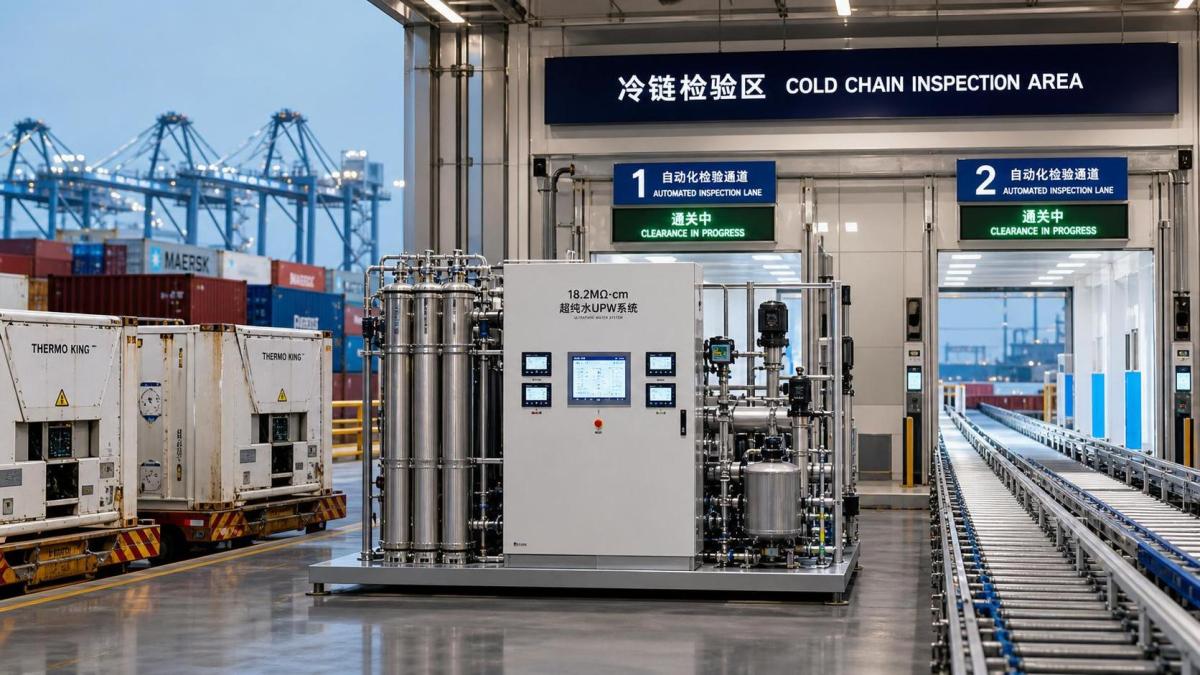
On July 6, 2026, Singapore's PSA put the second phase of a dedicated UPW cold-chain inspection channel into operation at Jurong Island Port, signaling a practical change in how 18.2MΩ·cm UPW systems may be processed at import. The update matters less as a routine port announcement and more as an execution change affecting customs handling, inspection preparation, delivery scheduling, and export performance for UPW system suppliers, semiconductor project contractors, and cross-border logistics teams serving Southeast Asian fab expansion.
What Was Confirmed at Jurong Island Port
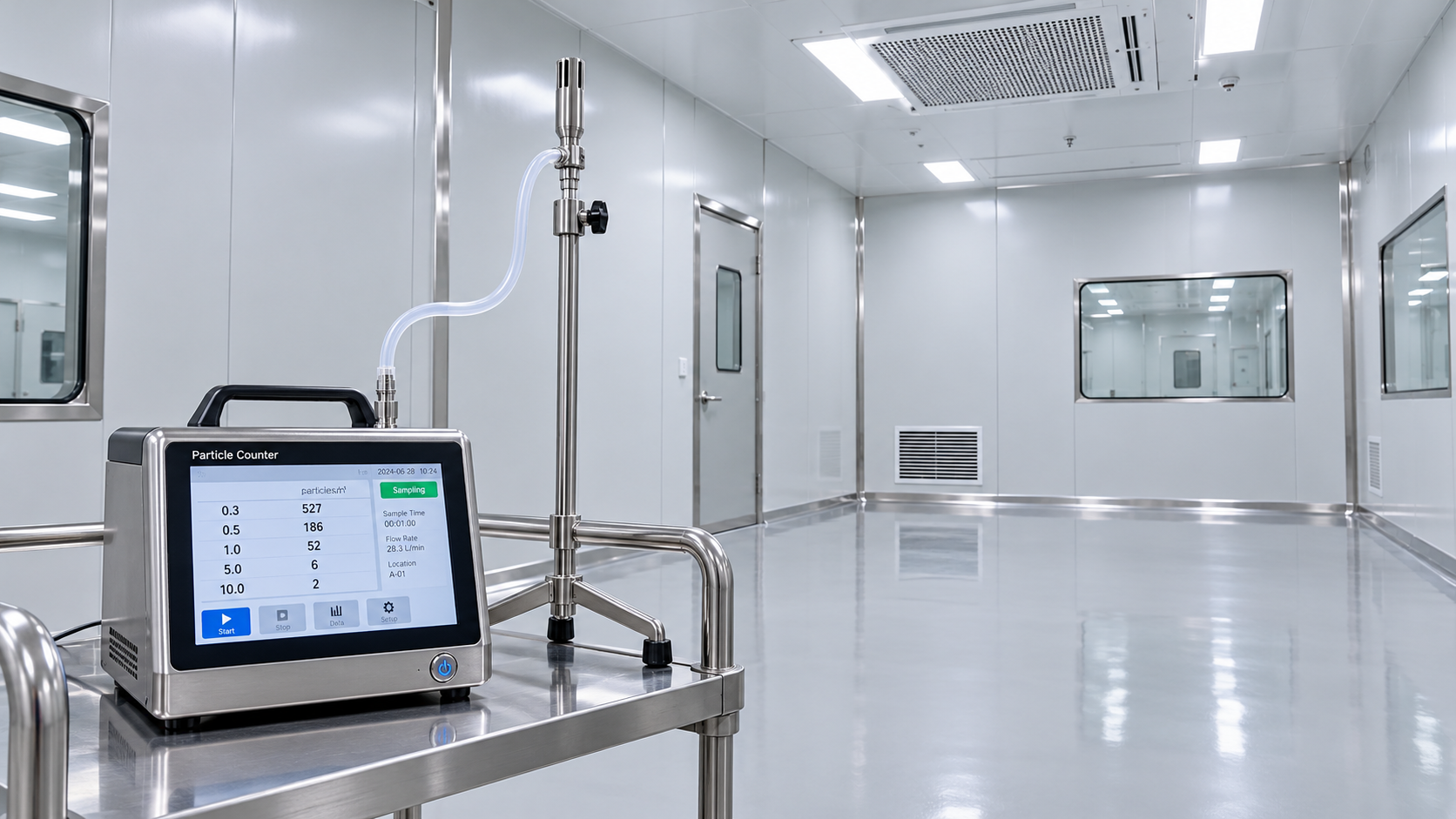
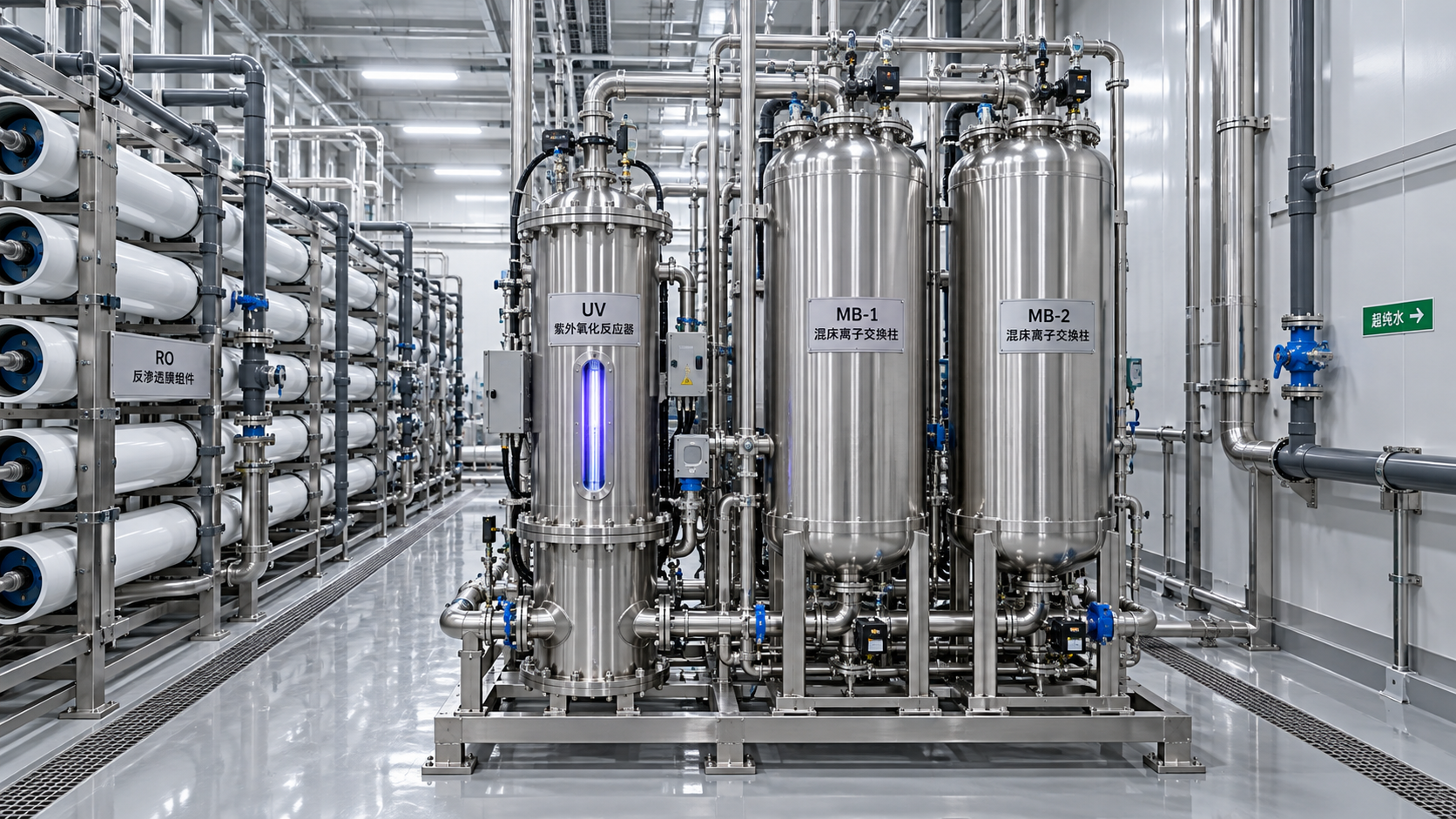
According to the provided event summary, PSA announced on July 6, 2026 that phase two of the dedicated UPW cold-chain inspection channel at Jurong Island Port had formally entered operation. The new setup adds a fully automated online calibration station for TOC and Resistivity as dual parameters. It supports whole-unit, non-disassembly clearance for 18.2MΩ·cm UPW systems. Based on the same provided information, the average import cycle for core UPW equipment has been shortened from 72 hours to within 48 hours.
The supplied summary also states that this change is expected to improve delivery timing for wafer fab expansion projects in Southeast Asia and to support the export fulfillment capability of Chinese UPW system integrators serving ASEAN markets.
Where the Execution Impact Is Most Likely to Appear
For exporters shipping complete UPW systems
From an industry perspective, the most immediate effect is on exporters that ship complete UPW equipment and systems into the region. A process that supports non-disassembly clearance can affect how suppliers prepare shipment files, technical descriptions, and acceptance-related materials before cargo arrival. What deserves closer attention is whether export teams now need to align product documentation more tightly with the inspection logic implied by TOC and Resistivity online verification, especially when selling complete systems rather than separated modules.
For fab project buyers and procurement teams
Procurement teams working on semiconductor capacity expansion may see the main impact in scheduling and delivery coordination. A shorter average import cycle can influence planned arrival windows, equipment sequencing, and handover expectations. Observably, buyers should pay attention to whether tender files, purchase specifications, and delivery clauses begin to reflect the practical availability of faster clearance for eligible UPW equipment, while still preserving contingency language where execution details are not yet fully visible in the input information.
For logistics and supply-chain service providers
Supply-chain operators handling specialized equipment imports may be affected through inspection booking, port-side coordination, and document readiness. The addition of a second dedicated inspection line indicates that clearance capacity for this category has been expanded. Analysis shows that freight forwarders, customs handling teams, and project logistics providers should closely track the documentation set, cargo presentation requirements, and any operational conditions associated with whole-unit inspection treatment, because timing gains can be lost if upstream shipment preparation does not match the inspection process.
For testing, compliance, and after-sales support functions
Where UPW systems are sold into projects that require strict technical verification, compliance and service teams may need to review how test records, calibration-related materials, and traceability files are presented alongside shipments. It is more appropriate to understand this as an operational compliance issue rather than only a logistics issue. If clearance increasingly relies on online validation of TOC and Resistivity conditions, document consistency between factory records, shipping files, and on-site support materials may become more important in practice.
Practical Items Companies Should Watch Now
Check whether technical files support whole-unit clearance
Analysis shows that companies exporting 18.2MΩ·cm UPW systems should review whether their technical documentation is organized for a whole-unit, non-disassembly inspection context. The input does not provide a formal checklist, so this should be treated as a monitoring point rather than a confirmed mandatory format. Still, consistency across specifications, quality records, and shipment descriptions is likely to matter more under a faster inspection workflow.
Revisit delivery promises and procurement calendars carefully
The reduction from 72 hours to within 48 hours can affect how suppliers quote lead times and how buyers structure delivery milestones. Observably, companies should avoid treating the announced timing improvement as an unconditional result for every shipment. What deserves closer attention is whether contracts, internal planning, and customer communication distinguish between an announced average process improvement and shipment-specific execution conditions.
Track how the inspection approach appears in commercial documents
Export, procurement, and project teams should watch for changes in the wording used in tenders, technical bid alignment, shipping instructions, and acceptance documentation. The supplied information confirms the addition of TOC/Resistivity online calibration capability and support for non-disassembly clearance, but it does not define how these points will be reflected across future transaction documents. That makes document monitoring a practical priority.
Keep after-sales and traceability records ready for cross-border execution
For integrators and service providers, faster port clearance does not remove downstream responsibilities linked to installation, quality follow-up, or traceability. Analysis shows that teams supporting ASEAN-bound projects should keep product records and service documentation in a condition that can support both customs-facing and customer-facing review, particularly where delivery performance is now more closely tied to project expansion schedules.
How This Signal Should Be Read at This Stage
Observably, this development is best read as an execution-level signal that port inspection handling for a narrow but important equipment category is becoming more operationally specific. It is not, based on the provided input alone, a broad regulatory overhaul or a fully defined new compliance regime. The stronger reading is that infrastructure and inspection capability at the port have been adjusted in a way that can change how trade participants prepare, document, and schedule UPW system imports.
What deserves closer attention is the next layer of implementation: whether official wording, working-level inspection practice, procurement documentation, and market behavior begin to align around this faster process. Industry participants should therefore continue watching for details in execution standards, document expectations, and customer-side adoption before treating the timing improvement as a settled baseline across all relevant shipments.
Why the Industry Is Paying Attention
At a practical level, the significance of this update lies in the connection between inspection method and delivery reliability. For UPW systems tied to fab expansion schedules, a shorter import cycle can influence procurement rhythm, supplier commitment windows, and project coordination. At the same time, the current information is most appropriately understood as a confirmed operational change at the port and a meaningful trade-execution signal, not as a complete statement of all downstream rules or market outcomes.
A balanced conclusion is that this development deserves close attention from exporters, buyers, and logistics operators dealing with high-purity water systems for semiconductor projects. The main value of the announcement is not only the reduced clearance timeline, but the indication that inspection handling for complete 18.2MΩ·cm UPW systems is becoming more structured around online verification and non-disassembly processing.
Basis of This Article and What Still Needs Verification
This article is generated from the user-provided news title, event date, and event summary. For events of this type, relevant source categories would usually include official port operator announcements, regulator releases, customs or trade administration information, industry association updates, standards-related materials, and reporting by established trade media. A specific official source link was not provided in the input, so that point still requires follow-up verification.
Further observation is still needed on detailed execution language, inspection interpretation in practice, documentation requirements, possible updates in tender or procurement files, market feedback from project participants, and how companies actually implement the announced process improvement in cross-border delivery operations.
Get weekly intelligence in your inbox.
No noise. No sponsored content. Pure intelligence.
 Oct 21, 2026How often is cleanroom certification required under ISO 14644-2?Cleanroom Certification is generally recommended annually under ISO 14644-2. Learn when risk-based extensions apply and which changes trigger earlier testing to plan with confidence.
 Oct 21, 2026FASEB Comments on NIH Draft Policy for Research Involving BiohazardsFASEB comments on NIH’s draft biohazard research policy call for risk-based biosafety oversight. Explore potential implications for laboratories, suppliers, and compliance teams.
 Oct 20, 2026How to disinfect ultrasound machines without damaging surfacesLearn how to disinfect ultrasoundmachines without surface damage. Explore compatible products, wet contact times, and probe care to protect patients and equipment.
 Oct 20, 2026Ultrapure Water in Semiconductor Manufacturing: Reuse and Quality Control InsightsExplore ultrapure water reuse in semiconductor manufacturing, key UPW quality benchmarks and analytical insights to help evaluate suppliers and protect process purity.
 Oct 19, 2026How cooling affects warpage in injection-molded consumer electronics housingsOptimize plastic injection molding for consumer electronics with cooling strategies to reduce housing warpage and improve assembly fit. Discover practical checks for stable, efficient production.
 Oct 18, 2026Can air leaks prevent a dehumidifier from holding its target dew point?Why can't our dehumidifier maintain the target dew point? Discover how air leaks increase moisture loads, spot hidden faults, and find practical fixes to restore reliable dew-point control.
 Oct 17, 2026How semiconductor process water treatment removes trace organicsSee how semiconductor process water treatment removes trace organics with RO, UV oxidation, and polishing. Learn how TOC monitoring helps verify purity and pinpoint contamination.
 Oct 16, 2026How to choose ultra pure water piping materials to limit leachingChoose ultra pure water piping with confidence. Compare PVDF, PFA, and stainless steel, assess leaching risks, and learn how to qualify your system for reliable purity.
 Oct 15, 2026How to size a skid-mounted deionized water system for peak demandCompare deionized water systems skid configurations for peak demand. Learn how to balance production, storage, and pump capacity to prevent shortages and avoid costly oversizing.
 Oct 14, 2026When is collaborative laboratory robotics suitable for sample sorting?Explore when collaborative laboratory robotics suits sample sorting. Discover key checks for safety, traceability, container compatibility, and throughput before choosing your solution.
 Oct 13, 2026How sandwich panel joints affect airtightness in cleanroom systemsCleanroom Systems sandwich panels need reliable joints for airtightness. Discover how gaskets, sealants, and testing help reduce leakage and protect cleanroom pressure control.
 Oct 12, 2026How to verify USP compliance for ultra pure water systemsUltra Pure Water Systems USP compliance: learn how to verify water quality, sampling, sanitization, trends, and validation controls at every point of use.
 Oct 11, 2026How tight temperature control prevents cleanroom process driftCleanroom process temperature control systems prevent costly drift by stabilizing critical conditions, improving repeatability, and protecting sensitive production workflows.
 Oct 10, 2026When does organic contaminant removal require TOC treatment?Organic contaminant removal requires TOC treatment when dissolved organics threaten product quality, equipment reliability, or process control. Learn how to assess risks and choose the right solution.
 Oct 08, 2026What affects lead times for sheet metal bending services in Canada?Sheet metal bending services Canada: discover how material supply, tooling, tolerances, finishing, documentation, and freight affect lead times for reliable project delivery.
 Oct 07, 2026How HVAC design for semiconductor fabs prevents airborne contaminationHVAC design for semiconductor fabs prevents airborne contamination through advanced filtration, pressure cascades, airflow control, and real-time monitoring. Explore key strategies for cleaner, more reliable wafer production.
 Oct 06, 2026How photovoltaic modules waterproof technology prevents moisture damagephotovoltaic modules waterproof technology prevents moisture damage with durable seals, drainage, and junction-box protection. Explore practical selection and testing insights.
 Oct 05, 2026How ISO 14644 Europe requirements affect cleanroom qualificationISO 14644 Europe requirements shape cleanroom qualification, from particle classification and recovery testing to monitoring, GMP alignment, and change control.
 Oct 04, 2026How to assess a pharmaceutical cleanroom solutions supplier’s ISO capabilityPharmaceutical Cleanroom Solutions supplier assessment guide: evaluate ISO 14644 capability, validation evidence, airflow design, documentation, and long-term GMP readiness.
 Oct 03, 2026What EU standards govern the design of BSL-3 laboratories in Europe?BSL-3 laboratories Europe: explore EU directives, EN standards, HVAC containment, commissioning, and practical design strategies for compliant, resilient high-containment facilities.
 Oct 02, 2026How EN 1822 defines HEPA filtration efficiency for cleanroomsHEPA filtration EN 1822 explained: learn how MPPS testing, local leakage limits, and filter classes support reliable cleanroom decisions.
 Oct 01, 2026How pharmaceutical process water systems control microbial riskProcess water systems pharmaceutical teams rely on can control microbial risk through hygienic design, monitoring, and validated sanitization. Explore practical compliance strategies.
 Sep 30, 2026When does a negative pressure laboratory need BSL-3 containment?Negative pressure laboratory or BSL-3? Discover the risk factors, engineering controls, and containment requirements needed for safe, compliant laboratory planning.
 Sep 29, 2026How to evaluate a TOC-zero water treatment supplier for UPW systemsChoose a TOC-zero water treatment supplier with confidence. Compare UPW performance, monitoring, validation, materials, service capability, and lifecycle cost.
 Sep 28, 2026What drives sustainable cooling cost in high-precision facilities?Sustainable cooling cost in high-precision facilities depends on thermal stability, energy, water, controls, and resilience. Explore smarter lifecycle strategies.
 Sep 27, 2026How to compare freight forwarding services for time-critical shipmentsCompare freight forwarding services for time-critical shipments with practical insights on routing, customs, visibility, specialized handling, and contingency planning.
 Sep 26, 2026How environmental integrity in laboratories supports reliable test resultsEnvironmental Integrity in laboratories safeguards samples, instruments, and staff. Discover practical controls for contamination, monitoring, and reliable test results.