Medical PPE Selection Guide: Cost, Compliance, and Supply Risks
Why has medicalppe become a strategic issue instead of a routine purchase?
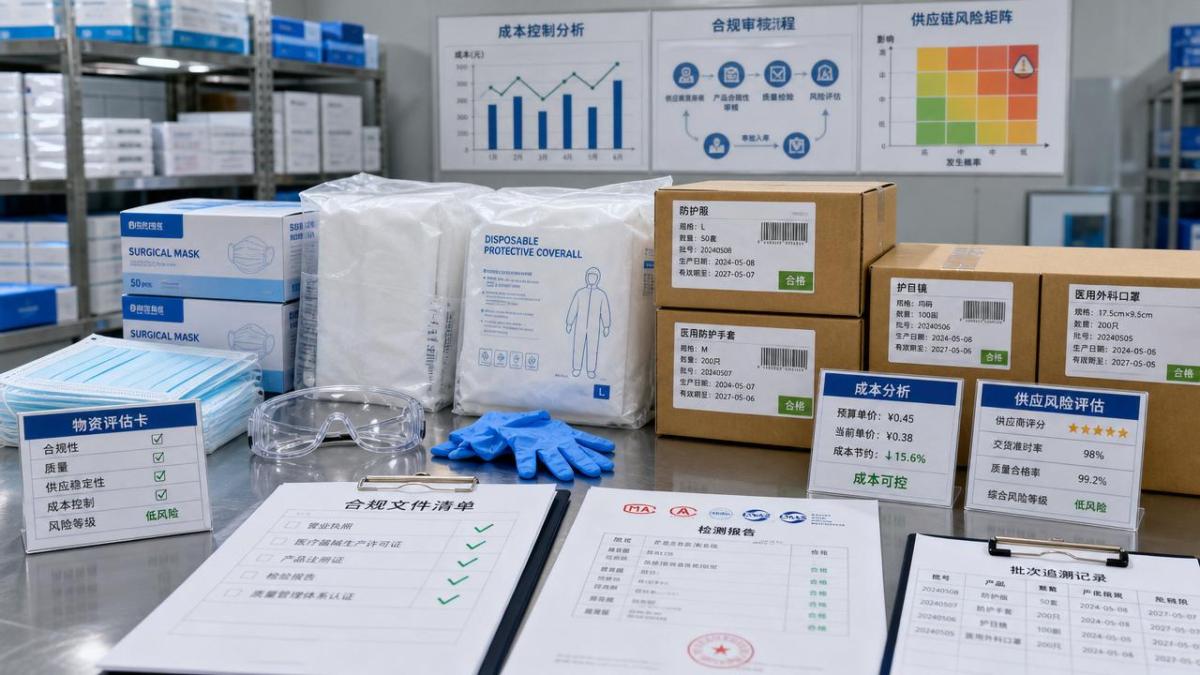
Choosing medicalppe now affects far more than unit price. It influences worker protection, audit readiness, waste volume, and supply resilience across healthcare, lab, and clean-controlled operations.
That shift matters in mixed-use environments. A hospital wing, biosafety lab, sterile packaging area, and high-spec cleanroom do not tolerate the same risks.
In practice, the best medicalppe decision sits between compliance and operational continuity. A cheaper glove or gown can become expensive after failures, rejected batches, or emergency replacement orders.
This is where G-ICE thinking is useful. Its focus on contamination control, biosafety engineering, and benchmarked standards helps frame medicalppe as part of a controlled environment strategy.
Simply put, medicalppe should be matched to risk level, regulatory exposure, and site conditions. That includes temperature control, particle sensitivity, chemical contact, and disposal requirements.
The more common mistake is buying by category name alone. “Mask,” “gown,” or “protective glove” says very little about barrier performance, certification scope, or fit for use.
What should you check first when comparing medicalppe options?
Start with the exposure profile, not the catalog. The right question is what the item must resist, contain, or prevent during actual use.
A useful first screen includes task duration, fluid exposure, aerosol risk, change frequency, and contamination sensitivity of the surrounding area.
For example, medicalppe used in a biosafety workflow may prioritize splash resistance and respirator performance. In a clean manufacturing zone, low linting and particulate control may matter more.
It also helps to separate mandatory features from preferred features. This prevents over-specification, which raises cost, and under-specification, which raises operational risk.
This kind of comparison table prevents rushed substitutions. It also makes later supplier discussions more objective.
How do compliance standards actually affect medicalppe selection?
Compliance is not a box-ticking exercise. It tells you whether medicalppe has been tested for the claims that matter in your use case.
Different jurisdictions and product categories use different frameworks. That is why a valid certificate in one channel may not fully support another application.
More importantly, the document set matters as much as the mark itself. A declaration without recent test data, lot traceability, or manufacturing consistency is weak support.
In controlled spaces influenced by ISO 14644 or biosafety protocols, medicalppe also interacts with broader environmental controls. Shedding, packaging cleanliness, and storage conditions become part of compliance performance.
A practical review usually checks these points:
- Product classification matches the intended use.
- Test reports are current and linked to the exact model.
- Packaging and labeling support traceability.
- Storage instructions fit site climate conditions.
- Change-control notices are available for materials or factories.
Needless to say, compliance failures often appear after purchase. They surface during inspections, incident reviews, or when substitute stock arrives without equivalent documentation.
Is the lowest-cost medicalppe ever the right choice?
Sometimes it is, but only when performance is truly equivalent. The real issue is total cost of use, not invoice price alone.
A lower-priced item may tear faster, fog eyewear, reduce dexterity, or force more frequent changes. Those effects increase consumption and slow work.
Medicalppe cost also includes hidden items. Disposal fees, stockholding levels, training time, fit-test repetition, and rejected inventory all belong in the calculation.
In facilities concerned with thermal stability or contamination control, poor storage tolerance can create losses before the product is even used. Heat, humidity, and damaged packaging are common triggers.
A more reliable evaluation uses side-by-side field data for thirty to sixty days. That usually reveals whether the “cheaper” medicalppe really saves money.
A simple cost test worth applying
- Track units consumed per shift, not per order.
- Record failures, complaints, and early replacements.
- Estimate waste handling cost by product type.
- Compare downtime caused by stockouts or swaps.
This method turns medicalppe selection into a measurable decision rather than a debate based on assumptions.
Where do supply risks usually hide, and how can they be reduced?
Supply risk rarely starts with a missing shipment. It often begins with overdependence on one factory, one region, one resin source, or one certification pathway.
Medicalppe became more volatile when global demand spikes exposed weak visibility. Lead times stretched, substitute materials appeared, and documentation quality became uneven.
The safer approach is to qualify supply depth before disruption arrives. That means checking manufacturing location, backup capacity, raw material flexibility, and change-notification discipline.
G-ICE-style benchmarking is helpful here because it treats PPE as one layer within a larger resilience system. Environmental controls, clean logistics, and digital monitoring all affect usable inventory.
When reviewing medicalppe supply risk, look for these warning signs:
- No documented secondary production site.
- Frequent SKU changes without advance notice.
- Long transit routes for critical items.
- Weak lot-level traceability after delivery.
- Certificates that do not match current packaging.
A balanced sourcing plan usually includes approved alternatives, minimum safety stock, and periodic document review. That is much more resilient than reacting after shortages begin.
What does a practical medicalppe selection process look like?
The strongest process is usually concise, documented, and easy to repeat. It connects risk assessment, technical validation, and supply review in one workflow.
A good starting point is to define the exact applications. Separate sterile tasks, splash-prone procedures, particulate-sensitive work, and chemical contact activities.
Then compare medicalppe candidates against those tasks using evidence, not broad claims. Ask for test reports, sample evaluations, packaging details, and storage limits.
After that, run a controlled trial. Include comfort, failure rate, donning consistency, and compatibility with the surrounding environment.
The final check is supplier resilience. Confirm lead time stability, alternate sources, batch traceability, and how updates are communicated.
A workable decision checklist
That framework keeps medicalppe decisions grounded. It also supports cross-functional review without turning the process into paperwork for its own sake.
So, what is the smartest next step?
Start by listing where medicalppe use is most critical, variable, or difficult to replace. Those are usually the areas where cost, compliance, and supply risk intersect.
Then build a short comparison standard for each major item type. Include required certifications, trial criteria, storage limits, and approved backup options.
In more controlled environments, align that review with broader contamination and facility benchmarks. That is consistent with the G-ICE view that protective equipment must work with the whole environmental system.
The strongest medicalppe program is rarely the cheapest on paper. It is the one that stays compliant, remains available, and performs predictably when conditions become less predictable.
If you are refining your selection approach, compare current items against actual use conditions, document quality, and supplier depth. That review usually reveals the clearest next move.
Get weekly intelligence in your inbox.
No noise. No sponsored content. Pure intelligence.
 Sep 15, 2026Smart HVAC investment insights for North American heat recovery projectsSmart HVAC investment insights North America: evaluate heat recovery, lifecycle costs, controls, and performance for resilient project decisions.
 Sep 14, 2026How SEMI standards shape water treatment design for semiconductor fabsSemiconductor water treatment SEMI guidance shapes resilient UPW design, contamination control, monitoring, reclaim strategy, and fab-ready validation.
 Sep 13, 2026What drives Biosafety Containment Systems cost in BSL-3 projects?Biosafety Containment Systems cost in BSL-3 projects depends on HVAC, layout, decontamination, controls, and commissioning. Discover how to build a credible budget.
 Sep 12, 2026How to qualify a fine chemical process solutions supplier for purity controlFine Chemical Process Solutions supplier qualification guide: evaluate purity control, traceability, contamination prevention, and safety for reliable high-purity production.
 Sep 11, 2026What drives cleanroom certification cost for ISO Class 1–9 projects?Cleanroom certification cost depends on ISO Class 1–9 requirements, test scope, HVAC readiness, documentation, and retesting. Explore practical budgeting insights to control project risk.
 Sep 10, 2026When should Procurement Directors prioritize heat recovery payback?Procurement Directors: learn when heat recovery delivers reliable payback, lower lifecycle costs, and safe performance in controlled industrial environments.
 Sep 09, 2026How to select an environmental monitoring system for cleanroomsEnvironmental monitoring system selection for cleanrooms: compare sensors, alarms, data integrity, integration, and installation to ensure reliable control.
 Sep 08, 2026How temperature stability affects semiconductor manufacturing yieldSemiconductor manufacturing temperature stability directly affects yield, overlay, metrology, and process control. Explore practical HVAC, monitoring, and zoning strategies.
 Sep 07, 2026How to prepare for a Regulatory Frameworks audit of cleanroom controlsRegulatory Frameworks audit readiness for cleanroom controls: build traceable evidence, verify alarms and monitoring, and close compliance gaps with confidence.
 Sep 07, 2026How to choose reverse osmosis systems with the right recovery rateReverse osmosis systems: learn how to select the right recovery rate for reliable water quality, lower scaling risk, efficient concentrate control, and stable long-term performance.
 Sep 05, 2026How does a negative pressure room work to contain airborne contaminants?How does a negative pressure room work? Discover how inward airflow, controlled exhaust, monitoring, and room design help contain airborne contaminants safely.
 Sep 04, 2026What TOC Limits Should Be Set and Monitored for a UPW Loop?What are our TOC limits for the UPW loop? Learn how to set defensible TOC thresholds, monitor trends, protect critical processes, and improve water-quality control.
 Sep 04, 2026What Are the Best Retrofit Options for Upgrading Existing Pharmaceutical Cleanrooms?What are the best retrofit options to upgrade existing pharma cleanrooms? Explore FFUs, HVAC modernization, pressure cascades, monitoring, and sealed finishes for compliant performance.
 Sep 04, 2026How Does a Negative Air Pressure Room Protect Adjacent Areas?What is a negative air pressure room? Learn how controlled airflow contains airborne hazards, protects adjacent spaces, and supports safer facility operations.
 Sep 04, 2026What Is ISO Class 1 Cleanroom Classification, and Where Is It Used?What is ISO Class 1? Explore its ultra-low particle limits, critical cleanroom design factors, verification methods, and uses in semiconductor, optics, and quantum manufacturing.
 Sep 04, 2026How Long After a UPW Deviation Does Yield Impact Typically Appear?What is the typical time lag from UPW deviation to yield impact? Learn how contamination, process sensitivity, exposure windows, and testing stages shape detection timing.
 Sep 04, 2026What Testing Data Should Engineers Review Before Approving a UPW Material?What testing data should be reviewed before approving a UPW material? Explore extractables, TOC, particle release, ionic leaching, corrosion, and reliability data for confident approval.
 Sep 04, 2026How Should Pharmaceutical Cleanrooms Choose Climate Control Systems?Which climate control systems are recommended for pharmaceutical cleanroom environments? Explore HVAC, humidity, pressure, HEPA filtration, and GMP-ready monitoring strategies.
 Sep 04, 2026Airtight Door Problems in Medical Spaces and How Buyers Prevent ThemA problem-solving guide for airtight door procurement, covering sealing performance, sensors, wall coordination, cleaning, maintenance, and acceptance risk.
 Sep 04, 2026What drives cleanroom design cost for ISO Class 7 projects?Cleanroom design cost for ISO Class 7 projects depends on HVAC, filtration, utilities, validation, and lifecycle strategy. Learn how to control budgets without compromising compliance or performance.
 Sep 03, 2026When do heat pipe heat exchangers suit pharmaceutical cleanrooms?Heat Pipe Heat Exchangers for pharmaceutical plants: discover when they support cleanroom energy recovery, airflow separation, humidity control, and GMP-ready HVAC design.
 Sep 02, 2026What determines biosafety cabinets price across different modelsBiosafety cabinets price varies by class, airflow design, filtration, size, certification, and installation. Compare models confidently to choose safe, cost-effective containment.
 Sep 01, 2026When does thermal energy storage cut peak-demand costs in plants?Thermal energy storage for industrial plants can cut peak-demand costs when tariffs, load profiles, and controls align. Explore practical savings, resilience, and integration factors.
 Aug 31, 2026How a digital environmental monitoring system supports audit-ready cleanroomsDigital environmental monitoring system strategies for audit-ready cleanrooms: improve traceability, alarm response, data integrity, and compliance confidence.
 Aug 30, 2026When does next-gen thermal management closed loop reduce chiller energy use?Next-gen thermal management closed loop systems can cut chiller energy by reducing lift, optimizing flows, enabling heat recovery, and improving controls. Discover when savings are real.
 Aug 29, 2026How chilled water piping layout affects pump energy useChilled water piping layout directly affects pump energy, control stability, and lifecycle costs. Explore practical design insights for efficient, reliable systems.
 Aug 28, 2026When thermal energy storage systems cut peak cooling costs in pharma plantsThermal Energy Storage Systems for pharmaceutical plants cut peak cooling costs, support compliance, and strengthen resilience. Explore the business case.